
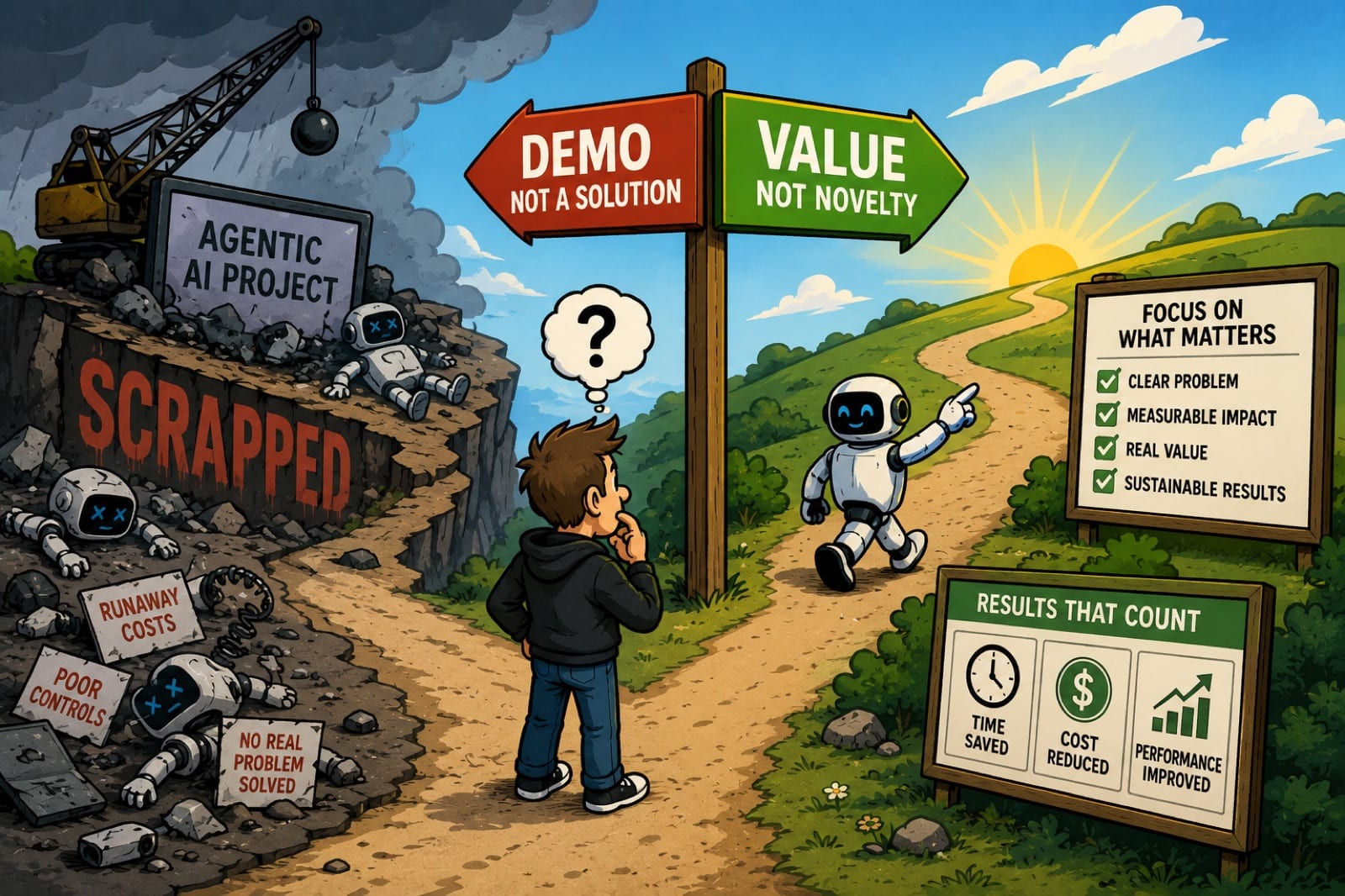
Here is a number to sober up a Monday. Gartner expects that more than 40 percent of agentic AI projects will be scrapped by the end of 2027. Not paused. Cancelled.
The reasons are not mysterious: runaway costs, risk controls that were never there, and the quiet realisation that the flashy proof of concept never actually solved a problem anyone was paid to solve.
I have watched this film before. It played in the early days of mobile apps, then again with big data, then with RPA. A wave of excitement, a rush of demos, and then a long hangover while everyone works out which projects were real.
Boring beats brilliant
The agentic projects that will survive 2027 have something dull in common. They are pointed at a clear, measurable job. A process that took humans eight hours and now takes two. A queue that used to overflow and now does not. Real hours, real rands, on a problem someone actually cares about.
The ones that get cancelled tend to start the other way around. The technology comes first, the use case is reverse-engineered to justify it, and the word "innovation" is doing a lot of heavy lifting in the business case.
So before you build, ask the unglamorous question: if this works perfectly, what exactly gets cheaper, faster or better, and can we measure it? If you cannot answer in a sentence, you are building a demo, not a solution.
Agentic AI is going to reshape how businesses run. But the prize goes to the ones who chase value, not novelty. If you would rather be in the surviving 60 percent, the team at First Technology Digital starts every agent with the boring question first.