
Every second AI conversation I have starts the same way. Someone wants to build the one agent. The super-agent. The single brain that handles sales, support, finance and the office kettle, all at once.
It is a lovely idea. It also tends to fall over.
There is a practical reason. Ask one agent to hold the whole business in its head and it runs out of room. Context windows are finite, instructions pile up, and the more you ask a single agent to be, the more average it becomes at all of it. The jack of all agents, master of none.
Build a team, not a hero
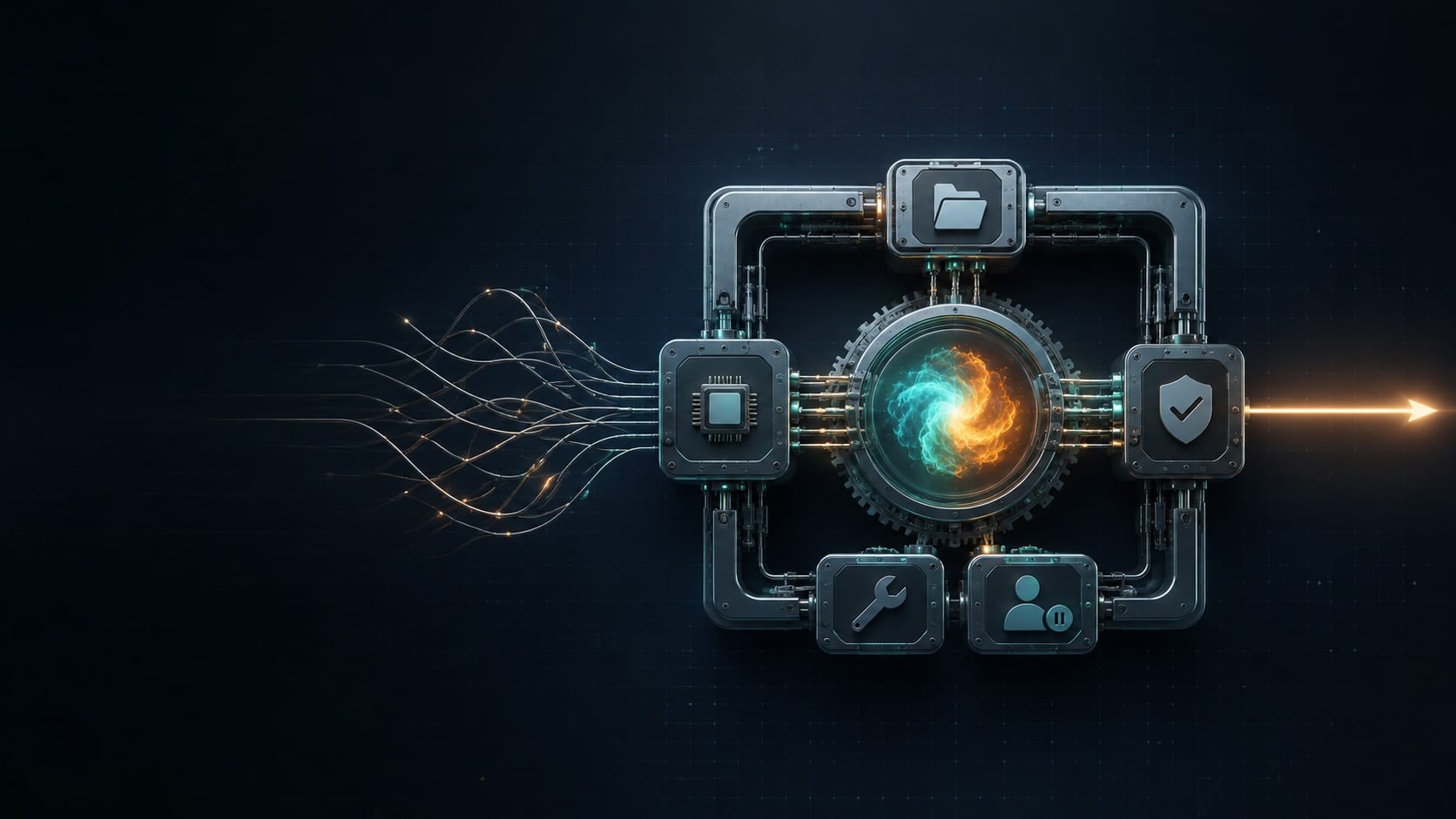
The shift happening across serious deployments in 2026 is away from the lone super-agent and towards small crews of specialists. One agent that is brilliant at reading documents. Another that is excellent at querying your data. A third that knows how to write to your systems safely. And an orchestrator that decides who does what, and in what order.
It is the oldest idea in business, really. You do not hire one person to be your entire company. You hire specialists and you give them a manager. Agents are no different. Narrow agents are easier to build, easier to test, easier to trust, and far easier to swap out when something better comes along.
So the real design question is not "what should my agent do?" It is "what does my team of agents look like, and who is the manager?"
Draw that org chart before you write a line of code. The team at First Technology Digital designs the crew, not just the cleverest single hire.