There is a quiet line that businesses are crossing right now, often without noticing.
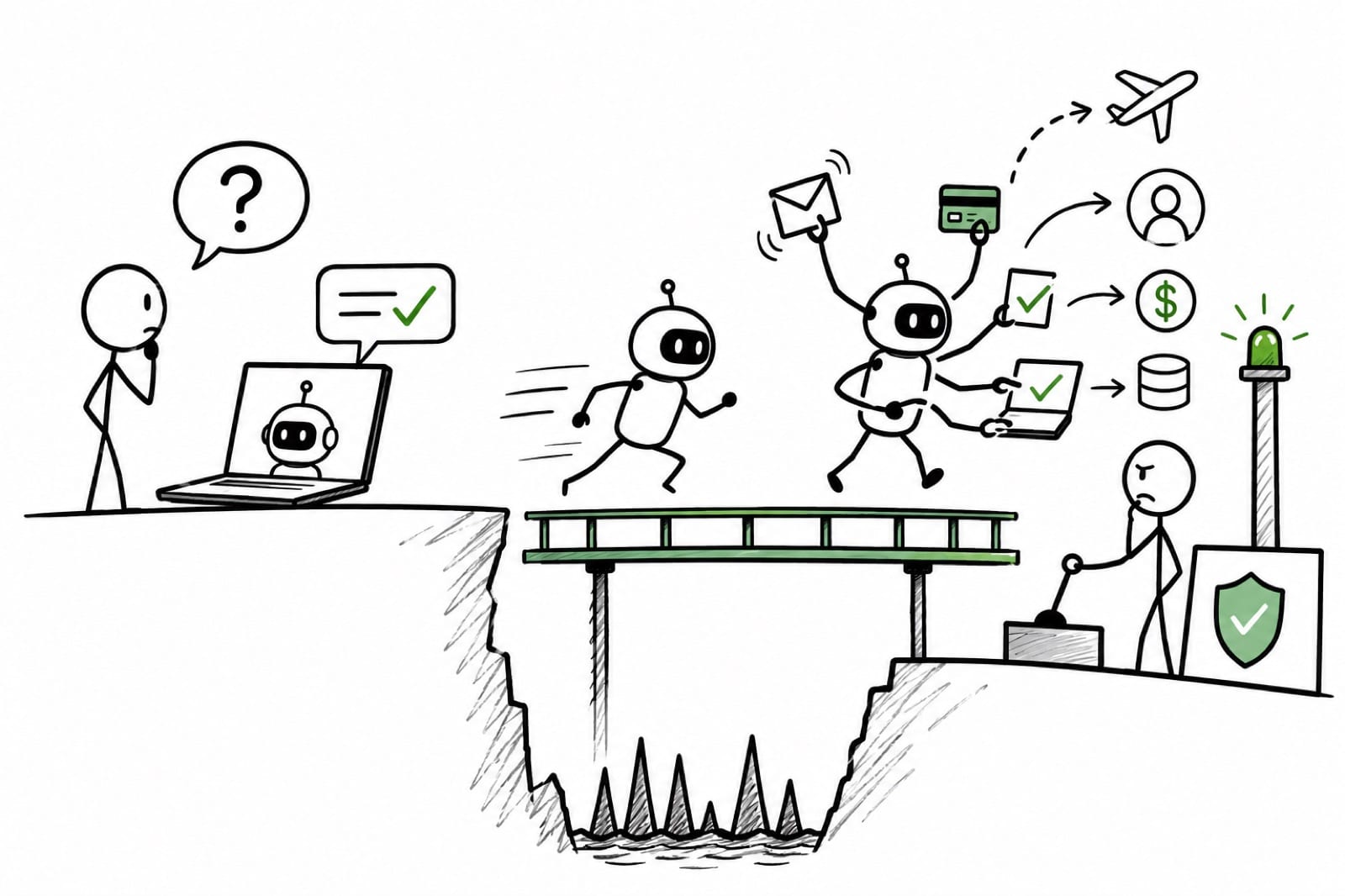
For two years, our AI tools answered questions. You asked, they replied, and if the answer was wrong you rolled your eyes and tried again. The cost of a bad answer was a minute of your time.
Agents change that maths. An agent does not answer, it acts. It books the flight. It sends the email to the client. It approves the refund, updates the record, kicks off the workflow. The cost of a wrong move is no longer a minute. It is a real thing that happened in the real world, with your name on it.
This is the difference between generative AI and agentic AI, and most people are still pricing the risk as if nothing has changed.
Autonomy needs a blast radius
Gartner reckons that by 2028, around 15 percent of day-to-day business decisions will be made autonomously by agents. In 2024 that number was zero. That is a quick trip from novelty to normal, and it deserves more than a demo and a thumbs up.
The answer is not to keep AI on a leash forever. It is to decide, deliberately, what an agent may do on its own and what it may not. Three simple questions go a long way:
- What is this agent allowed to do without a human in the loop?
- What is the worst thing that happens if it gets it wrong?
- How quickly can we see it, stop it, and undo it?
Get those right and autonomy becomes an asset. Skip them and you have handed the car keys to something that has never driven, and told it not to phone home.
The shift from answering to doing is the best thing to happen to business AI in years. Just go in with your eyes open. The team at First Technology Digital builds agents that act, with the guardrails that let you sleep.