
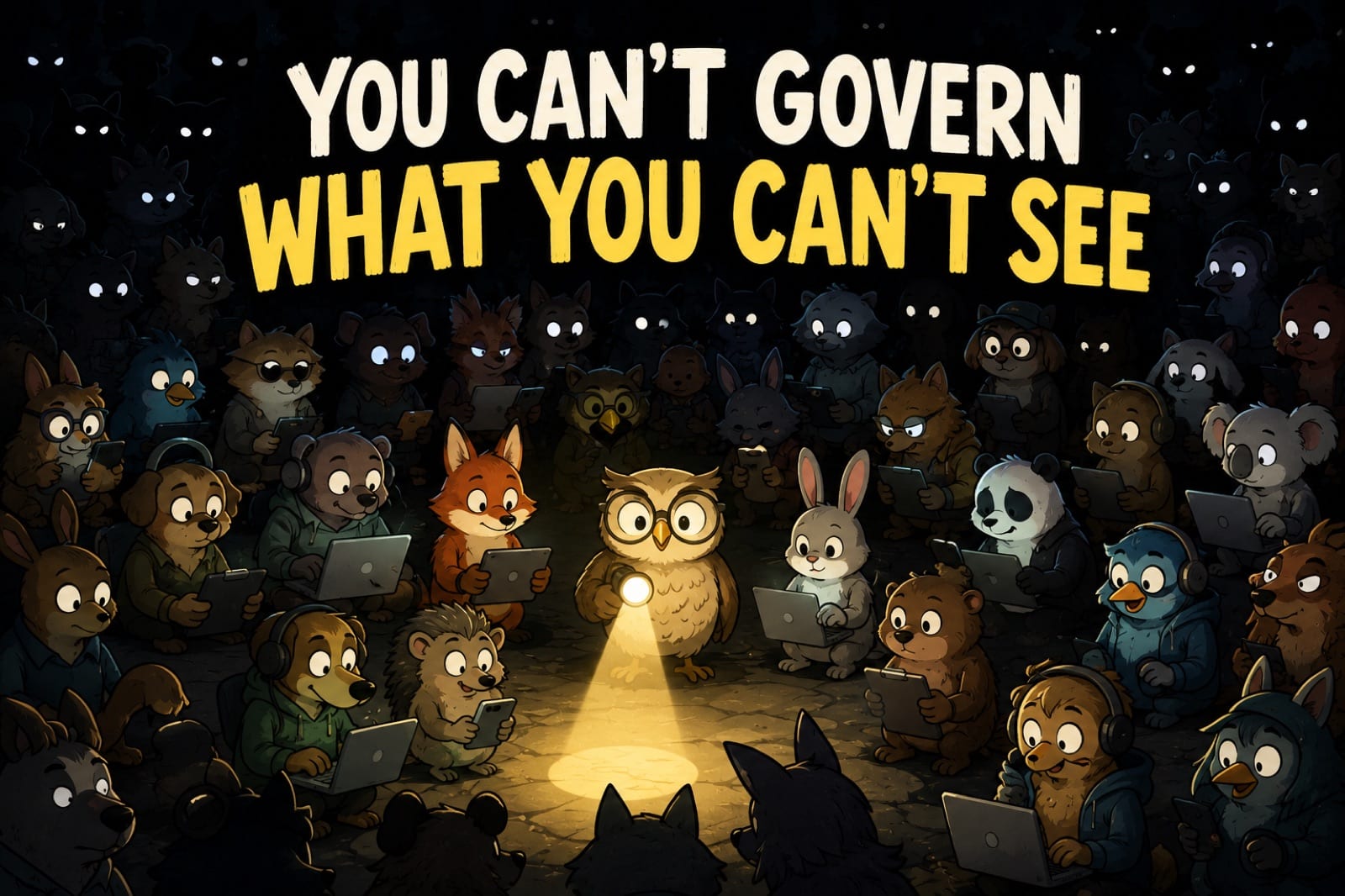
A year ago, most companies could tell you exactly how many AI tools they were running. A handful of Copilot licences, maybe a chatbot on the website. Today, ask the same question and watch the room go quiet.
Agents have started to breed. A marketing team spins one up in Copilot Studio. Finance wires another into a reconciliation process. Someone in IT builds a clever little helper over the weekend. None of it is wrong. All of it is invisible.
This is the new shadow IT, except now the shadows can act on their own.
The numbers back it up. Heading into 2026, only around 7 to 8 percent of organisations have any kind of joined-up governance across their agents. Fewer than a quarter can give you a full inventory of what their agents are actually doing, and to what. Everyone is busy building. Almost nobody is keeping the register.
You cannot govern what you cannot see
Here is the uncomfortable part. An agent is not a document or an app. It has access, it has intent, and it takes action. Multiply that by a dozen teams each quietly building their own, and you do not have an AI capability. You have an attack surface with good intentions.
The fix is not to slow everyone down. Tell people to stop building and they will build in the dark. The fix is a control plane: a single place where every agent is registered, where you can see what each one can touch, where you can grant access, revoke it, and switch an agent off when it misbehaves.
Boring? Maybe. But the businesses that win with agents over the next two years will not be the ones with the most agents. They will be the ones who can still name all of theirs.
If you have lost count of yours, the team at First Technology Digital can help you find them again, and put a proper control plane around them.