

When an AI agent gives a bad answer, it usually comes down to the usual things, like a vague system prompt or a tool it doesn't know how to use. But a lot of the time it's also just not looking at the whole picture. It knows your data inside and out, but has no idea what's really happening in the world this week.
Ask an agent how much to order for summer. With only your company data it looks at last year's sales and your current stock and says to order the usual, which makes sense. But with the web mixed in it can also see that the forecasts are all about El Niño and a hotter summer than normal. So it suggests bumping up the order on the hot-weather lines and getting it in before your suppliers get busy.
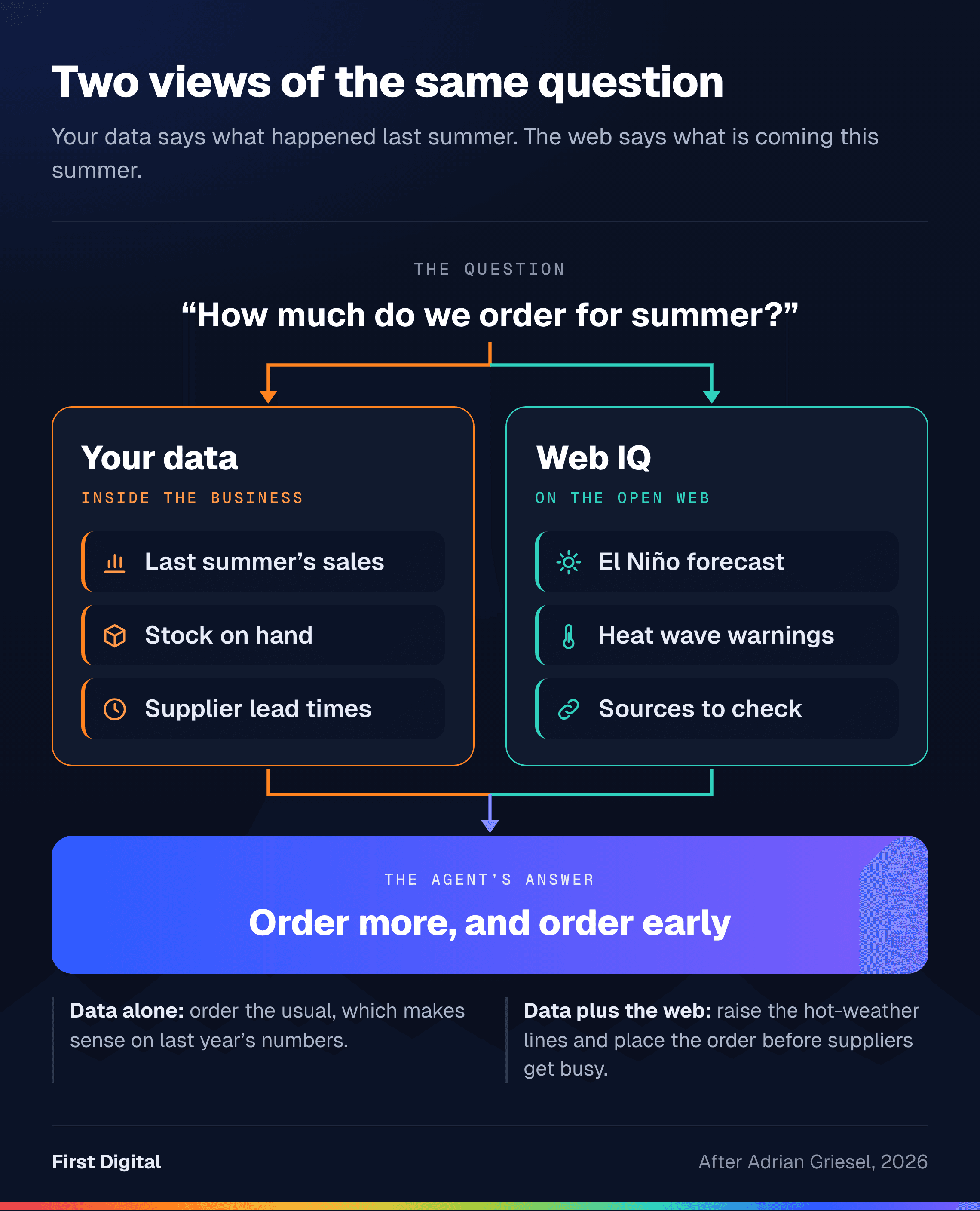
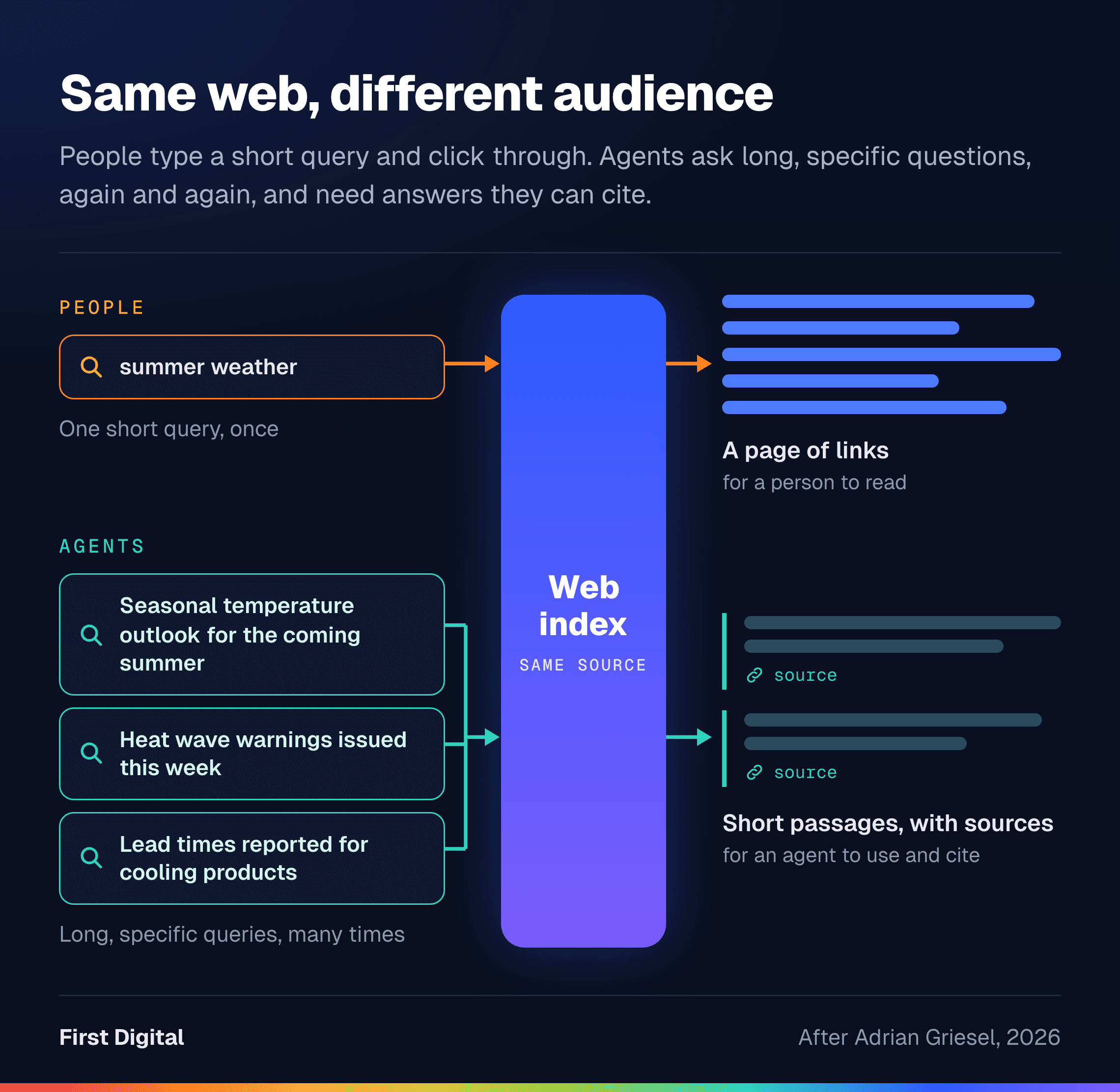
Web IQ is Microsoft's way of giving an agent that second view: better grounding. It's web search built for AI agents rather than people, so instead of getting a page of links to click through, an agent asks a long, specific question and gets back short passages with the source attached. It already sits behind Copilot and ChatGPT, and it's now open to Azure customers generally, so this isn't a preview you have to queue for.
The fun part is what people have already started doing with it.
- Genspark, which builds AI agents, says Web IQ cut its voice assistant's response time from 6 seconds to 0.6, and its voice team has already moved over.
- Bigger names are using it too. Publicis Groupe runs the competitive analyses, battlecards and trend radars in Marcel, its internal platform, on it, and National Grid uses it to bring fresh web information into its own AI apps.
- Microsoft's sample code has a movie night helper that cites everything it finds.
- Another sample fills in a vendor security questionnaire from the vendor's own public pages, quoting and linking each answer so someone can check it. If you've ever filled one of those in by hand, you'll see why it stood out.
- There's a claim checker that checks a piece of writing one statement at a time before it's published, which I probably should have run on my first draft of this.
- And InfoWorld suggested a stock agent that keeps an eye on weather forecasts for products that sell with the weather, which is the one I keep coming back to.
And that's just some of the things people have found so far. There are a lot more use cases to discover.
About the author
I'm Adrian Griesel, an Agentic Software Engineer in First Digital's Innovation business unit.